

Documents you should keep in your car
Although you are not legally required to keep any documents in your car, it can be helpful to keep certain paperwork in your vehicle. In this guide, we will explain which documents you should keep in your car – and which should be left in a safe place at home.
Get a free valuation
What documents are you legally required to keep in your car?
There’s no legal requirement to keep specific documents in your car. However, having certain information easily accessible can be helpful if your car breaks down, you're involved in an accident, or you need to quickly check vehicle details.
What documents are helpful to keep in my car?
-
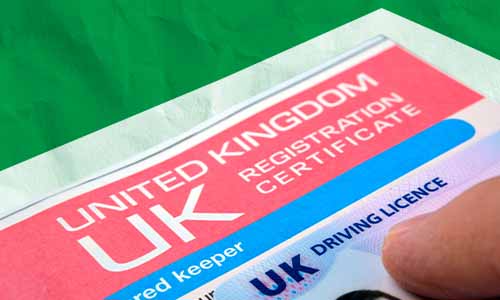
Driving licence
You don’t have to carry your driving licence while driving in the UK. However, if a police officer asks to see it and you can’t produce it at the roadside, you may be required to present it at a nominated police station within 7 days.
As such, many drivers choose to carry their driving licence with them. Having it on your person can make roadside checks quicker and may help avoid the inconvenience of needing to visit a police station later.
Police can usually check whether you hold a valid licence through DVLA records, but they may still ask you to provide proof if necessary.
-
Insurance certificate
You must have valid motor insurance to drive legally in the UK. At a minimum, this must be third-party insurance.
Police can usually check your insurance status instantly using the Motor Insurance Database (MID). However, you may still be asked to show proof of insurance.
This could be in the form of a paper certificate. Many drivers now keep a digital copy of their insurance certificate on their phone or access it through their insurer’s app.
If you’re unable to provide proof at the roadside, you may be asked to present it at a police station within 7 days.
-
Breakdown cover details
If you have breakdown cover, it can be useful to keep your provider’s contact number or policy details somewhere easy to access in case your car breaks down. This can also be helpful when finding your insurer’s details.
Many drivers now access this information through a mobile app or saved contact on their phone, so a physical document is not always necessary.
-
Owner’s manual
The owner’s manual includes useful information about your car, such as recommended tyre pressures, servicing intervals, and fluid capacities. Many drivers keep it in the glove compartment so it’s available if they need to check something about the vehicle.
-
Service history
A car’s service history records show when maintenance work was carried out, including servicing, repairs, and mileage.
A comprehensive service history can help show that a car has been well maintained and may increase buyer confidence and resale value when it’s time to sell.
Many modern vehicles now use digital service records (DSR) stored by the manufacturer or dealership network, rather than a physical service book.
If you do have a service book, it may be helpful to bring it with you when showing the car to potential buyers. Otherwise, it’s usually safer to store it at home, as it’s an important document that could be lost or stolen if left unattended.
-
Emergency contact information
Some drivers choose to keep a small card with emergency contact details in the car. This can be helpful if you’re involved in an accident and unable to communicate with first responders.
Many people now store this information digitally on their phone, but a physical card can still be useful.
-
Accident information form
It can be helpful to keep a simple accident information sheet and a pen in your car. If you’re involved in a collision, you may need to record details such as:
- The other driver’s name and contact details.
- Their insurance provider and policy number.
- Vehicle registration numbers.
- The time and location of the incident.
Many drivers now record this information on their phone or take photos of the scene. However, having a simple form in the car can still make it easier to exchange details and gather the information your insurer may require when making a claim.
Documents you shouldn’t keep in your car
There are certain documents that you should refrain from keeping in your car, including:
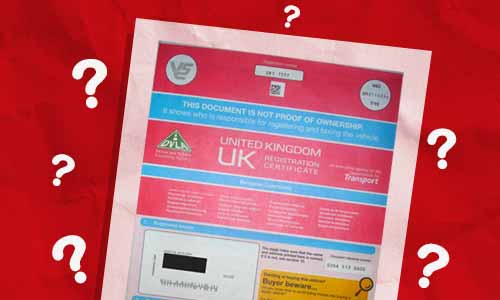
- Your V5C logbook.
- Personal letters.
- Your passport.
- Bank statements.
If stolen, these documents could be used to commit identity fraud. You should keep these documents in a safe place at your home.
Thinking about selling your car?
It’s likely you’ll need some documents besides those you normally keep in your car. Read our guide to the documents you need to sell your car to make sure you’re prepared for a smooth sale.